Candy and Cronus take their toll. I had my wisdom teeth extracted on the 4th. I was given local anesthesia for my face as well as nitrous oxide and a general anesthesia to dip me into a semi-conscious state for the procedure. The day before the operation I traveled to Philadelphia to visit the Mütter Museum. This vast and eclectic collection of medical curiosities is managed by the prestigious College of Physicians and is truly a spectacular exhibition. 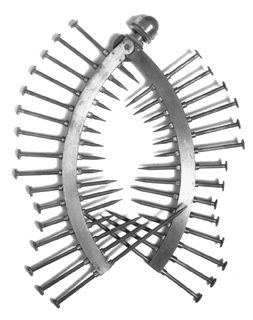 Glass cabinets line velvet walls providing temporary shelters for partial skeletal fragments, waxen fetal reproductions, medical journals and anatomy textbooks bound with human skin, and photographic documentation depicting an endless amount of bizarre cases that would keep Victorian scholars baffled and intrigued for years. That night I had a terrible nightmare wherein I was shrunk down to the size of a rodent and dissected in a dark amphitheater to a hostile (and possibly, sinister) public. And reclining on that dentist’s chair at 7:45 in the morning, I could not help but think of all the butchering that had happened in the name of science and all those rusty, archaic instruments now resting in glass cabinets… waiting to be picked up, and used again. As the gas kicked in, I briefly hallucinated the surgeon pulling out what could only have been some sort of bone-crushing device meant for extracting brain matter. Those Bastards, I thought, they are going to butcher me here on this slab and sell the profitable parts to the Black Market… possibly even back to the Museum. I braced myself for a frontal lobotomy, but nothing came and eventually I lost interest as the drugs set in. I was “awake” for the entire operation. I heard the crunching, slicing, and whizzing of the drill used break up the teeth, sending tiny splinters across the room. I distinctly recall the dentist informing me that they would “have to remove an infected molar, as well.” I used my free arm to give him a big “O.K.” symbol with my hand and managed to mumble something to the degree of, “That’s totally fine with me, dude.”

Re-enactment of the first operation under anesthesia (ether). The actual operation took place on October 16, 1846; this re-enactment took place shortly afterwards.
After the operation I asked for my teeth back. They told me that I could not have them because they were now a BIO-HAZARD. “At least let me say goodbye to them… to my babies.” They consented and brought me to the recovery lounge. The nurse came in with an extended arm and opened her hand, palm up. There they were, exposed to the open air: five half-rotted teeth laying in a pool of blood on her cold, rubber glove. 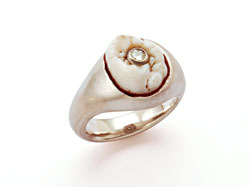 And observing the teeth for the first time without possession and function, I appreciated them for what they truly were: five overturned tombstones from a graveyard. “Now that the gums are unplugged, the souls are bound to escape,” I told the nurse, but she seemed nonplussed. It was probably too late, anyway. The ghosts and demons once held at bay by those ivory monuments were now free to roam the far reaches of Earth and pursue their dark, inhuman desires. “You fools,” I shouted as I was discretely escorted from the premises. They were all doomed, but I didn’t care. They had unleashed their own destruction, and there was no escape. So be it. Good luck and Godspeed, my babies… Godspeed.
I went home and turned on the television.  Twin Peaks was on the Chiller Network. It was the episode where David Duchovny plays FBI Agent Denise/Dennis Bryson. It is unclear from the series whether Bryson would self-identify as a cross-dresser, a transvestite or transgender. Bryson began wearing women’s clothing during a DEA undercover operation and found that it relaxed him. Bryson identifies as “Denise,” wears women’s clothing and presents female behavior during working hours and otherwise. When required for a sting operation, Bryson dons a man’s suit and goes by “Dennis.” This was interesting for two reasons:
First, there is an obvious connection to Dionysus. In Greek mythology, Dionysus is described as being womanly or “man-womanish”. He is the god of duality and was raised by Hermes. He has two separate origin stories that accent his “twice-born” character. In one he is the offspring of Zeus and the mortal woman Semele. The mortal demands Zeus to reveal himself in all his glory as proof of his godhood. He comes to her wreathed in bolts of lightning; mortals, however, can not look upon an undisguised god without dying, and she perished in the ensuing blaze. Zeus rescued the fetal Dionysus by sewing him into his testicles. In the other origin story, Dionysus was the son of Zeus and Persephone, the queen of the Greek underworld. A jealous Hera attempted to kill the child by sending Titans to rip Dionysus to pieces after luring the baby with toys. (See Dionysus and his Mirror) Zeus drove the Titans away with his thunderbolts, but only after the Titans ate everything but the heart, which was saved, variously, by Athena, Rhea, or Demeter. Zeus used the heart to recreate him in the womb of Semele, hence he was again “the twice-born.” As a champion of androgyny, the allusion is obvious.
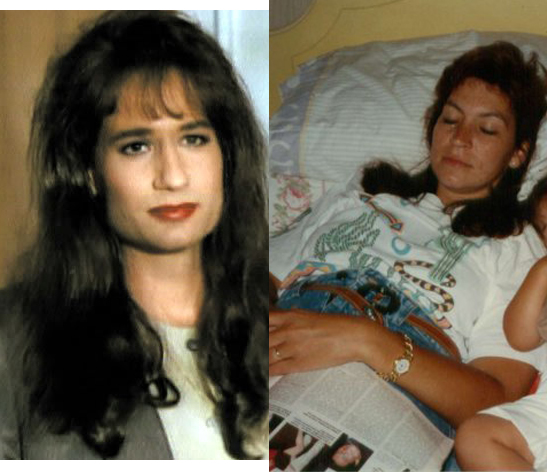
Two Denises
Secondly, “Denise” Duchovny in drag looks surprisingly like my mother, whose name is also “Denise.” To further the coincidence, my mother was named after her older brother Dennis who died soon after childbirth. Their visual similarity is superficial, of course, being two people with Czech/Slavic descent and similar hairstyles. I was pondering the implications of these events and enjoying the “Percs” of the operation when it occurred to me that losing teeth was a powerful symbol of death and rebirth. Also, the dream in which I was “transformed” and “dissected” was about a dramatic psychological change. Manifestations of Dionysus are manifold in this reality and it is necessary to acknowledge and understand the intentions of this divine entity if one is to maintain psychological health. Therefore, it is imperative that one give respect by honoring the god in the traditional way: Bacchanalia.
Dionysus is a god who transcends boundaries, subverting preexisting borders between life and death, man and woman, wilderness and society. The earliest rites took place in the wilderness – in the forests and woods, the marshes, and particularly high in the mountains, where the lower oxygen content was suitable for trance induction. Later the ‘priest’ would simply cast their staff into the ground, at any suitable location, and hang a mask and an animal skin from it, the circle drawn around this center becoming the sacred precinct for however long the staff remained. Underground chambers were also often used for initiations, which may have originally taken place in natural caves, particularly those by the shoreline. Liminal boundary zones being especially sacred to Dionysos. The Orphic texts of the late period record a boukolos, or ‘cowherd’, as an offerer of sacrifice, sayer of prayers, and hymn singer, who seems to have been the nearest thing they ever had to a priest. Other inscriptions record an archiboukolos, or ‘chief cowherd’ presiding over these boukoloi, and in some records there is also mention of boukoloi hieroi, ‘holy cowherders’ as well as hymnodidaskaloi,’hymn teachers’. The cowherds were necessary because the “sacred wine” used in the ceremonies contained hallucinogenic mushrooms that grew on the feces of local cattle.
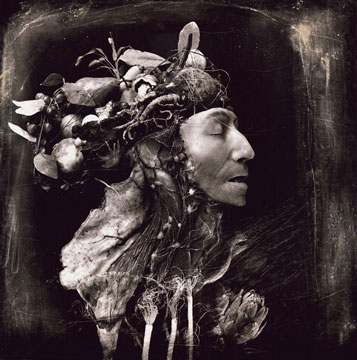
In intoxication, physical or spiritual, the initiate recovers an intensity of feeling which prudence had destroyed; he finds the world full of delight and beauty, and his imagination is suddenly liberated from the prison of everyday preoccupations. The Bacchic ritual produced what was called ‘enthusiasm’, which means etymologically having the god enter the worshipper, who believed that he became one with the god.
::Bertrand Russell, A History of Western Philosophy::
Traditional offerings to Dionysus include but are not limited to the following: musk, civet, frankincense, storax, ivy, grapes, pine, fig, wine, honey, apples, Indian Hemp, orchis root, thistle, all wild and domestic trees, black diamonds.
I call upon loud-roaring and revelling Dionysus,
primeval, double-natured, thrice-born, Bacchic lord,
wild, ineffable, secretive, two-horned and two-shaped.
Ivy-covered, bull-faced, warlike, howling, pure,
You take raw flesh, you have feasts, wrapt in foliage, decked with grape clusters.
Resourceful Eubouleus, immortal god sired by Zeus
When he mated with Persephone in unspeakable union.
Hearken to my voice, O blessed one,
and with your fair-girdled nymphs breathe on me in a spirit of perfect agape.


 *penumbra report.